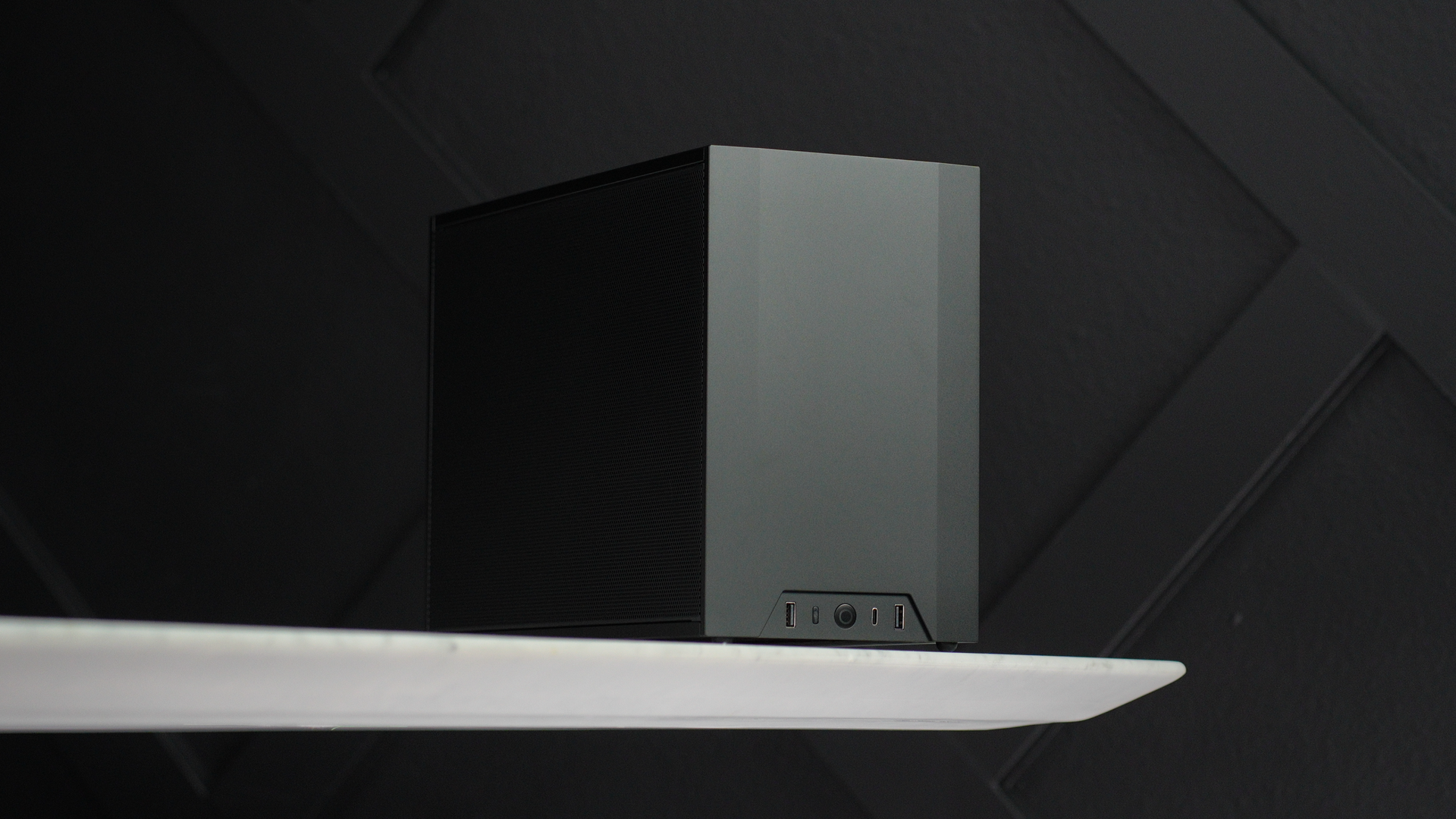
NCASE M2 Review: What the M1 Evo Should Have Been
There’s been a lot of hype around the NCASE M2, and honestly, I approached this one a little skeptical. The M1 Evo had promise but fell short in ways that became more frustrating over time — confusing cooling options, questionable compatibility with Founders Edition cards, and an awkwardly messy build process. Eventually they patched it with a revised back panel, but that didn’t exactly inspire confidence.
So when I saw they were calling this case the M2 — not just “M1 Evo V2” — I figured they were hitting reset. And I’m glad to say, it really does feel like a proper evolution. In fact, it might be the most versatile case in its size class right now.
Design & Pricing: Mostly Makes Sense… Mostly
The M2 comes in at 15.6 liters, which is small but not cramped. It supports a variety of configurations — flipped GPU layout, reference layout, vertical GPU, air or water cooling, SFX or ATX PSU — you name it. And the base model starts at $165, which is a great value for the quality of materials you get.
That said, some of the pricing tiers are strange. For example, upgrading from the “round” front panel to the “angled” design adds $40 — a 25% price bump for a cosmetic tweak. Yet in the older M1 Evo, the angled version was cheaper. And oddly, the most expensive “Grater” front panel doesn’t even include front I/O.
Assembly Experience: Massively Improved
The M1 Evo’s assembly process was frustrating. The M2 fixes that. You now build it using just a few screw types (mostly M3 flatheads), the front I/O is pre-installed and much cleaner, and the standoff placements — while still unmarked — are far more intuitive.
The motherboard tray supports multiple vertical positions, depending on whether you’re using ITX or microATX. In this build, I used a microATX board and a Ryzen 7 9800X3D, and everything dropped into place easily. NCASE also ditched the awkward dual front USB-C ports and turned one of them into a status LED, which honestly makes way more sense.
Component Support: Flexibility Everywhere
- GPU: Supports up to 4-slot, 359mm cards
- CPU Cooler: Clearance of 144.8mm (enough for D12L, barely)
- PSU: SFX or ATX supported (with an extra $15 bracket)
- Cooling: Supports 280mm radiators or large air coolers
I went with the Noctua D12L for this build, which is technically 145mm tall — just over spec — and it fits, though it does brush up against the side panel. NCASE actually shows this cooler in their official builds, so it’s considered valid.
The downside is that you won’t be able to use this cooler paired with the side bracket. Which is a shame, because I would have loved to use this case in the same configuration as my Dan C4-SFX. But unfortunately, that’s not 100% possible. Unless you were to use a shorter CPU cooler, of course.
GPU Fitment & Power: Yes, You Can Use a Founders Edition
I installed an RTX 4080 Super Founders Edition (3-slot, 310mm), and it fits with plenty of room. But like many cases, the power connector can be tight. I used a flexible 12VHPWR cable, and it pressed against the side panel more than I’d like. A 90° adapter would’ve helped. Keep that in mind if you’re going with a 40 or 50-series card.
Airflow was my only real limitation here. I had to skip the side fan bracket because of the size of the CPU cooler. I added a bottom intake and two slim fans above the GPU instead — not ideal, but effective.
The Flaws: Mostly Minor, but Still There
Cable management is pretty much nonexistent. There are few routing options, and PSU cable pressure is a real concern if you’re not careful. I also think it’s a miss that you need to pay extra for the ATX bracket, and that PCIe slot covers aren’t included. You’ll end up with gaps unless you print your own — which not everyone can do.
Also, while you can technically use large coolers and GPUs, you’re often sacrificing something — fan clearance, side panel pressure, or cable strain.
Final Verdict
The NCASE M2 is a huge step forward over the M1 Evo. It’s clean, compact, highly compatible, and thoughtfully built. The improvements to I/O, screw simplification, and component flexibility make this feel like a refined platform that’ll work well for years.
It’s not perfect — cable routing, power supply support, and pricing inconsistencies still hold it back a bit — but overall, it delivers on the vision the Evo never quite nailed.